First impressions and setting
Main storyline and characters
Combat and weapon variety
Exploration and open world
Side quests activities
Progression and gear upgrades
Mythological and legendary encounters
Strengths and weaknesses
DLC Expansions
First impressions and setting
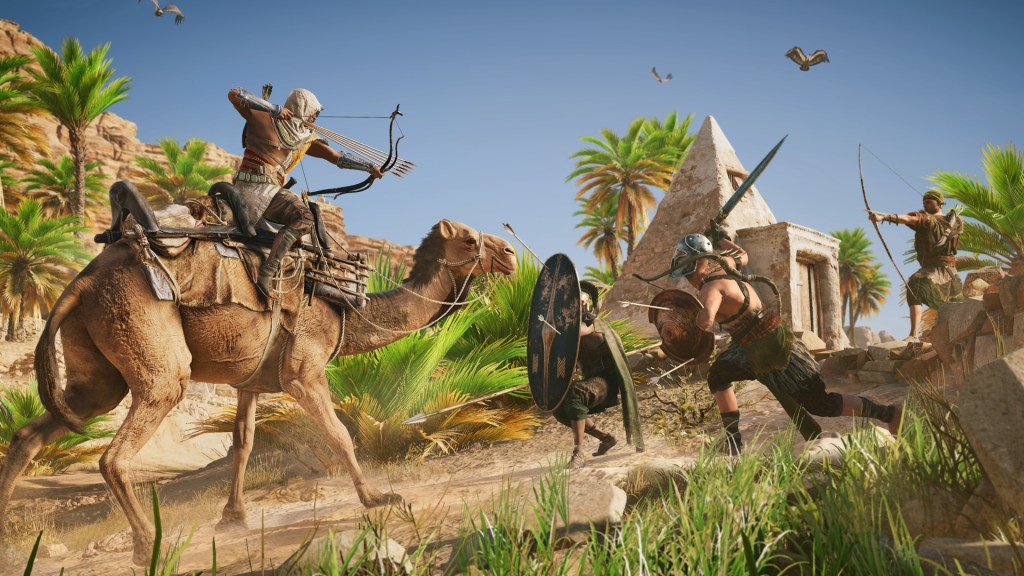
Assassin’s Creed Origins immediately feels like a bold reinvention of the series a living, breathing world brought to life with care and detail. The moment you step into ancient Egypt, you’re surrounded by monumental architecture, bustling marketplaces, and endless stretches of desert and fertile Nile shores. IGN highlighted how “each city has its own culture and architecture,” and the sense of discovery is constant. You can travel on foot, horseback, camel, or by boat, with every journey revealing a new facet of this grand civilization.
Ancient Egypt’s historical Immersion
Set during the late Ptolemaic period, Origins captures a turning point in Egypt’s history political upheaval, cultural blending, and the looming shadow of Roman influence. Eurogamer described Egypt as “staggeringly vast,” with every region offering a unique look and feel. From the towering pyramids of Giza to the lush greenery of the Nile Delta, the game’s world is both visually stunning and historically rich. Ubisoft’s attention to detail turns the map into more than just a backdrop it feels like a living cultural journey, with vibrant cities, sacred temples, and rural villages alive with daily activity.
Even small moments watching fishermen cast their nets or priests perform rituals contribute to an immersive experience that blends entertainment with an almost documentary-like authenticity.
The origins of the assassin brotherhood
At its core, Origins tells the story of Bayek of Siwa, a Medjay whose personal tragedy sets him on a path toward justice and ultimately leads to the birth of the Assassin Brotherhood. His journey is deeply personal yet evolves into a grander mission of defending the innocent and opposing tyranny. Bayek’s relationship with Aya adds emotional depth, and many critics have praised him as one of the franchise’s most compelling protagonists thanks to his humanity, conviction, and adaptability.
This is not just another Assassin’s Creed story it’s the foundation of the entire Assassin-Templar conflict, framed in a way that blends intimate storytelling with sweeping historical drama.
Main storyline and characters
Assassin’s Creed Origins weaves a narrative that is both deeply personal and historically expansive. At the center is Bayek of Siwa, a Medjay sworn to protect the people of Egypt. His story begins with tragedy a loss that fuels his quest for justice. What starts as a hunt for those responsible gradually expands into a mission to challenge systemic corruption and protect Egypt from forces seeking to control its destiny. The pacing balances moments of quiet reflection with high-stakes confrontations, making the journey feel both intimate and epic.
Bayek’s journey and personal motivations
Bayek’s motivations are rooted in loyalty, justice, and a deep love for his homeland. His role as a Medjay defines his sense of duty, but his personal loss drives the emotional weight of the story. Throughout the game, you see him wrestle with the costs of vengeance, the burden of leadership, and the sacrifices required to stand for what is right. His relationship with Aya, his partner and equal in both skill and conviction, adds layers of tenderness and complexity, showing a rare vulnerability in a world of political intrigue and violence.
Key historical figures and allies
The story integrates well-known historical figures from the late Ptolemaic period, including Cleopatra, Julius Caesar, and Ptolemy XIII. These alliances are not simple each figure has their own ambitions, and Bayek must navigate shifting loyalties to achieve his goals. Along the way, he forms bonds with rebels, scholars, and common citizens whose struggles paint a broader picture of life in ancient Egypt. Each ally contributes to the larger fight and often challenges Bayek’s views on justice, freedom, and the future of Egypt.
How choices shape the story
While Origins is less about branching endings and more about emotional nuance, the choices you make in dialogue and actions can influence relationships and the tone of the story. Deciding whether to show mercy, to uphold tradition, or to defy authority shapes how others perceive Bayek. These subtle shifts keep the narrative engaging and give players a sense of agency in a world where the larger events of history are inevitable but personal legacies are yours to define.
Combat and weapon variety
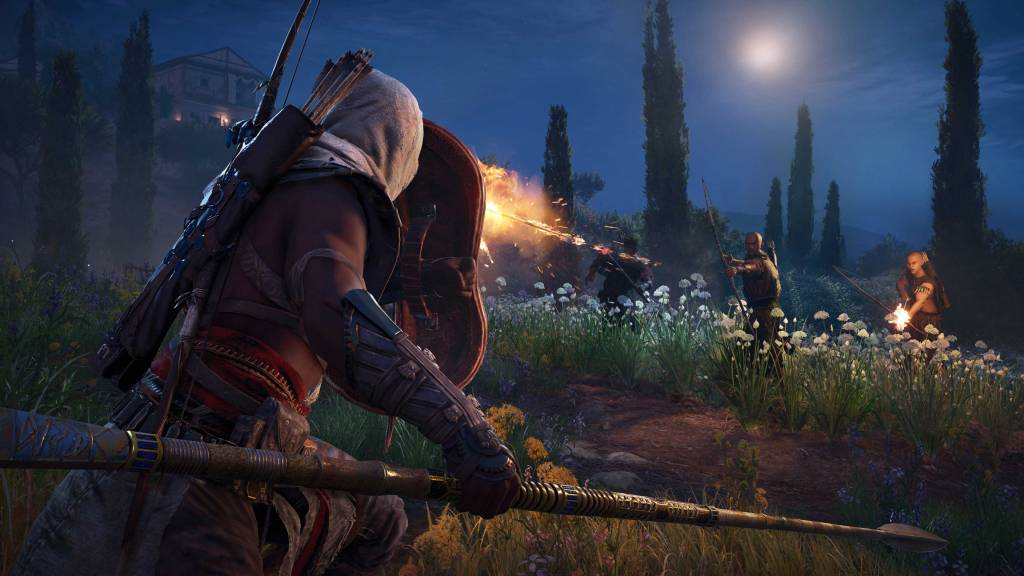
Combat in Assassin’s Creed Origins marks a significant shift from earlier entries in the series, moving toward a more tactical, skill-based system. Fights are no longer about simply countering attacks they demand timing, positioning, and awareness of your surroundings. The system encourages experimentation with weapons, each offering its own feel, strengths, and weaknesses. Whether you’re engaging in a duel under the scorching sun or ambushing an enemy camp at night, the game rewards adaptability and creativity in combat.
Melee weapons, shields and heavy arms
Melee combat in Origins is diverse and weighty, with weapon types ranging from nimble swords and dual blades to massive heavy clubs and battle axes. Each class of weapon changes your attack speed, reach, and combo potential. Shields play a crucial role, allowing for both defense and offensive counterattacks. Larger weapons can break through enemy guards but leave you vulnerable if mistimed. This blend of offense and defense makes close-quarters encounters a matter of skill rather than button-mashing.
Bows, ranged attacks and special skills
Ranged combat is equally varied, with four main types of bows: the precision-focused Hunter Bow, rapid-fire Light Bow, devastating Warrior Bow, and long-range Predator Bow. Each serves a distinct tactical role, whether it’s picking off a guard from a distance or scattering enemies in a chaotic skirmish. Special skills, unlocked through the ability tree, enhance ranged tactics from controlling an arrow mid-flight to unleashing explosive shots. This flexibility allows players to blend stealth and open combat seamlessly, adapting to whatever challenges Egypt throws at them.
Exploration and open world
The world of Assassin’s Creed Origins is massive, vibrant, and alive, offering one of the most ambitious recreations of an ancient civilization ever seen in gaming. From the bustling streets of Alexandria to the endless dunes of the Sahara, every corner of the map feels crafted with care and historical authenticity. Exploration isn’t just about sightseeing it’s tied to gameplay, with hidden tombs, dangerous bandit camps, and ancient mysteries scattered across the land. The absence of strict mission markers at times encourages natural discovery, making exploration feel organic and rewarding.
Major cities, landmarks and regions
Egypt in Origins is a land of contrasts cosmopolitan cities, rural farming villages, lush riverbanks, and vast, empty deserts. Alexandria dazzles with Greek architecture and a lively port, Memphis feels steeped in ancient Egyptian tradition, and Siwa offers a more intimate, personal starting point for Bayek’s journey. Iconic landmarks like the Pyramids of Giza, the Great Sphinx, and the Lighthouse of Alexandria aren’t just visual set pieces; they can be climbed, explored, and often hide secrets or loot. The variety in geography ensures that no two regions feel alike, and each area offers unique challenges and opportunities.
Mounts, boats, desert survival
Travel in Origins is fast, fluid, and thematically rich. Horses and camels are the primary mounts, each with their own handling and advantages. Boats allow you to traverse the Nile and reach isolated islands or river-based settlements. But exploration comes with risks sandstorms can obscure vision, extreme heat tests your survival skills, and dangerous wildlife lurks in unexpected places. Adapting to these environmental hazards becomes part of the adventure, reinforcing the feeling that Egypt is as much a character in the story as any person Bayek meets.
Side quests activities
While Assassin’s Creed Origins delivers a strong main storyline, it’s the side content that truly makes ancient Egypt feel alive. Side quests aren’t just filler; many are fully voiced, narratively engaging, and often tie into the social or political struggles of the time. You might find yourself helping farmers reclaim stolen grain, tracking down missing family members, or hunting dangerous predators threatening a village. These stories often reveal more about Egypt’s everyday life than the main missions, giving depth to the world and its people.
Contracts, bounties, mini-stories
The game features a variety of repeatable contracts and bounties that cater to players looking for extra challenge and reward. You can take assassination contracts from mysterious informants, track down high-value targets, or participate in timed events that bring unique encounters. Mini-stories often emerge organically a random conversation overheard in a marketplace might lead to a quest, or stumbling upon a destroyed caravan in the desert could begin a chain of events. These smaller adventures add a sense of unpredictability, making exploration feel worthwhile at every step.
Tombs, puzzles, and hidden treasures
Egypt’s deserts and ancient landmarks are filled with tombs, each offering unique puzzles, environmental challenges, and rewards. Some tombs require clever navigation through trap-laden corridors, while others challenge you with light-based puzzles or hidden switches. Beyond the treasures which can include rare weapons, crafting materials, and fragments of ancient lore these tombs often hide connections to the wider Assassin’s Creed universe. Discovering them feels like peeling back layers of history, and for completionists, they offer some of the most memorable moments in the game.
Progression and gear upgrades
In Assassin’s Creed Origins, progression blends traditional RPG elements with the series’ signature exploration and combat. Your power isn’t just tied to story advancement it’s shaped by how you approach leveling, gear improvement, and ability selection. The system encourages steady growth, rewarding players who explore Egypt’s vast world, complete diverse activities, and engage with its side content.
Leveling system and ability points
As you complete quests, defeat enemies, and discover new locations, you earn XP that feeds into a flexible leveling system. Each level grants ability points, which can be invested into three distinct skill trees Hunter, Warrior, and Seer. Whether you prefer long-range bow mastery, brutal melee dominance, or creative use of tools and gadgets, the skill system allows for unique playstyles. Higher levels not only unlock more powerful abilities but also let you equip stronger gear, making progression feel directly tied to your combat readiness.
Crafting, materials stat bonuses
Gear upgrades are handled through a robust crafting system that pushes you to hunt wildlife, dismantle old weapons, and gather rare materials from the environment. Improving Bayek’s hidden blade, bracers, quiver, and breastplate can give you significant stat boosts such as increased damage, higher health, or enhanced stealth capabilities. Crafting is not a side distraction it’s a core part of staying competitive, especially when facing elite enemies or high-level bounty hunters. This system keeps exploration rewarding, as every resource you collect has the potential to give you a decisive advantage in battle.
Mythological and legendary encounters
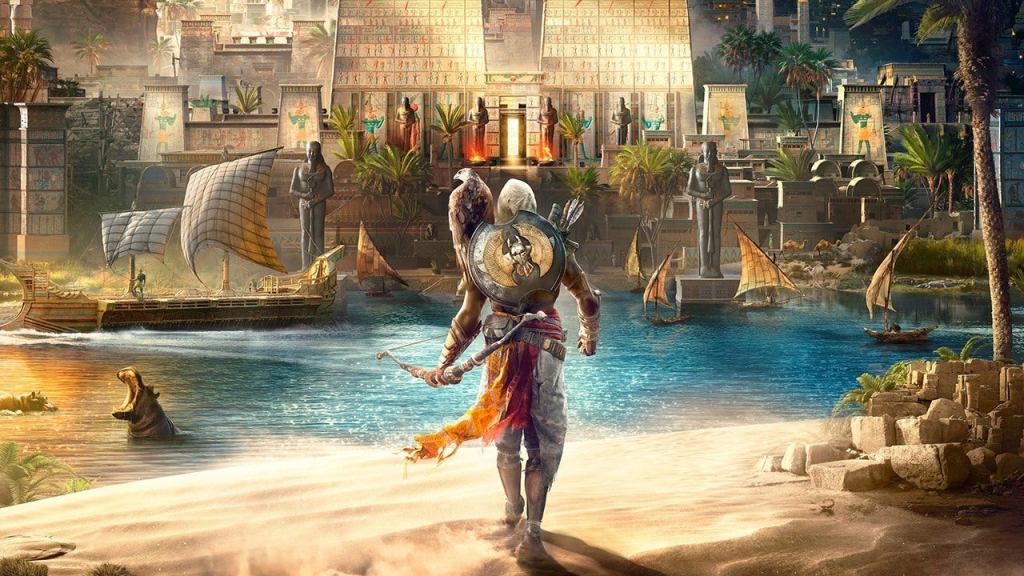
While Assassin’s Creed Origins is deeply grounded in historical Egypt, it isn’t afraid to dive into the realm of myths and legends. These moments add a surreal, larger-than-life layer to the gameplay, giving players a chance to battle godlike beings and wield weapons of near-mythic power. They’re not just spectacle these encounters push your combat skills, preparation, and gear to the limit.
Trials of the gods events
The Trials of the Gods are time-limited events where Bayek faces manifestations of ancient Egyptian deities such as Anubis, Sobek, and Sekhmet. These colossal bosses appear in shimmering arenas against dramatic backdrops, each with unique attack patterns, environmental hazards, and phases that require adaptability. The fights demand top-tier equipment, precise dodging, and smart use of abilities. Victories reward you with exclusive legendary gear pieces tied to the gods themselves, encouraging repeated participation whenever these trials return.
Legendary weapons and boss battles
Outside of divine trials, the world hides formidable human and mythical foes guarding rare treasures. Some of the most challenging battles come from Phylakes relentless bounty hunters who patrol the map and attack on sight. Defeating them can earn you exceptional weapons with unique perks. In addition, special quests and hidden areas often lead to legendary weapons steeped in myth, from blades with fiery effects to bows with incredible range and precision. These battles and rewards give the game a sense of epic adventure, blending history with legend in a way that feels both thrilling and rewarding.
Strengths and weaknesses
Every game in the Assassin’s Creed franchise has its defining traits, and Origins is no exception. While it pushes the series forward with fresh mechanics and a gorgeous setting, it also carries over some of the old pitfalls. Here’s how it balances its strengths against its shortcomings.
Visual detail and world building
The most undeniable strength of Assassin’s Creed Origins is its breathtaking recreation of Ancient Egypt. From the golden dunes of the desert to the bustling streets of Alexandria, every location feels alive with intricate details wandering merchants, wildlife behavior, and environmental sounds create a sense of place few open-world games can match. The lighting, water reflections, and vast draw distances make exploration a constant visual reward. Even smaller villages feel authentic, complete with local architecture and culture that immerse you in the era.
Repetitive tasks and grinding
While the world is massive and beautiful, it sometimes suffers from content bloat. Many side activities, such as clearing out enemy camps or fetching items, start to feel repetitive after the tenth or twentieth time. Certain upgrades and story progress also require significant grinding for materials, which can break immersion and slow momentum. For players eager to focus on the main narrative, this can feel like padding. Still, for those who enjoy methodical completion, these tasks extend playtime and offer steady rewards though they don’t always innovate in structure or variety.
DLC expansions
Post-launch, Assassin’s Creed Origins received two major DLC expansions that not only extended the playtime but also deepened the narrative and broadened the scope of the world. Both offered distinct tones, environments, and gameplay elements, making them more than just filler content.
The hidden ones overview
The Hidden Ones is a direct continuation of Bayek’s story, set four years after the events of the base game. It takes place in the Sinai Peninsula, a rugged and politically tense region where the Roman Empire’s presence sparks new conflicts. This expansion focuses heavily on the growth of the Assassin Brotherhood, introducing more structured Assassin operations and further developing Bayek’s leadership role.
The missions feel tighter and more focused compared to the base game’s vast sprawl, offering a more concentrated story experience. The smaller map is still rich in detail, featuring mountainous passes, Roman fortresses, and coastal settlements, all brought to life with the same visual fidelity as the main game. It also increases the level cap, adds new gear, and delivers a narrative that bridges Origins with the later Assassin’s Creed lore.
The curse of the pharaohs overview
If The Hidden Ones is grounded in history, The Curse of the Pharaohs leans boldly into the mythological side of Origins. Set in Thebes and its surrounding areas, the expansion introduces supernatural elements through the mysterious curse plaguing Egypt. Players face off against undead pharaohs, explore surreal afterlife realms like the Field of Reeds and the Duat, and uncover tombs filled with otherworldly enemies.
The tone shifts toward dark fantasy, but it still ties back to Bayek’s personal quest and the themes of legacy and responsibility. The visual design here is among the most striking in the series, blending authentic Egyptian iconography with dreamlike, otherworldly landscapes. New weapons, armor sets, and mythical boss battles keep the gameplay fresh while the expanded level cap and additional abilities make Bayek feel more powerful than ever.
 Assassin’s Creed Origins – Guides, Tips, and Story Overview